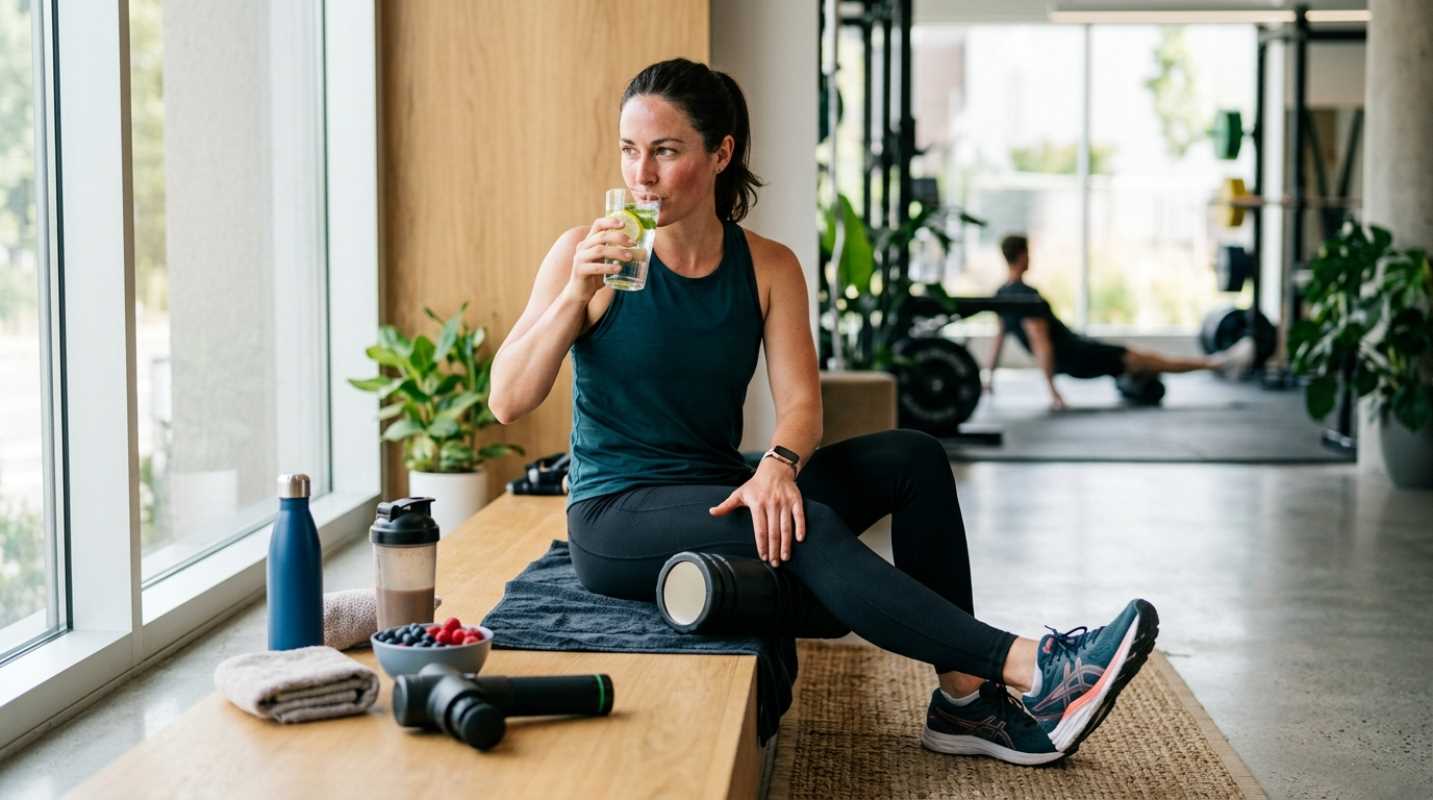
Have you ever finished a brutal workout, barely able to walk down the stairs, and thought, "I just need to do this again tomorrow"? We've all been there. There's a stubborn myth in the fitness world that more is always better, that if you aren't crawling out of the gym, you aren't trying.
But here's the truth. You don't actually build muscle or get faster while you're lifting weights or sprinting. You do it when you're resting. During a hard workout, you're tearing your muscle fibers down. Recovery is when your body repairs those micro-tears, making you stronger than you were before.
If you ignore recovery, you're just breaking your body down without ever letting it rebuild. It's like trying to build a house but never letting the concrete dry. Let's look at a smart, science-backed recovery approach that works.
Mastering the Immediate Post-Workout Window
For years, supplement companies told us we had to chug a protein shake within thirty seconds of dropping the barbell, or our gains would vanish. Let's bust that myth right now.
The famous anabolic window isn't a tiny thirty-minute crack. It's actually a wide four-to-six-hour window surrounding your workout.² If you had a solid meal a couple of hours before your training, you don't need to panic. But if you train fasted in the morning, getting some nutrients in quickly is a smart move.
What you eat depends on how you train. Here's a simple guide
• Endurance and Hybrid Athletes: You need to replenish your empty fuel tanks. Aim for a 3:1 to 4:1 carbohydrate-to-protein ratio. This means getting about 1.0 to 1.5 grams of carbs per kilogram of body weight every hour after your workout.
• Strength Athletes: Your focus is muscle repair. You don't need as many carbs, but you should aim for 20 to 40 grams of high-quality, leucine-rich protein within two hours of your session.
Don't forget about water. Simply drinking plain water isn't enough because dehydration slows down how your body transports nutrients. You should aim to replace 150% of the fluid weight you lost during your workout, and you need to add electrolytes like sodium, potassium, and magnesium to actually absorb that water.
Finally, don't just collapse onto the couch. Doing some light, low-intensity movement like an easy walk or a slow spin on a bike helps flush out metabolic waste. It keeps your blood flowing, which brings fresh oxygen and nutrients to your tired muscles.
Evidence-Based Muscle Soreness Relief
When the muscle soreness hits, what works to stop the ache? We have access to high-tech tools, but the science shows that the simplest methods often win.
Let's look at the battle between the twenty-dollar foam roller and the expensive massage gun. A controlled trial compared these two tools over three days of muscle soreness. The results were surprising. Foam rolling for just five minutes per muscle group improved muscle tone, reduced stiffness, and restored tissue elasticity. The massage gun failed to reach statistical significance on any of those physical recovery metrics. Massage guns are great for a quick, feel-good sensory buzz, but the foam roller does the physical work to restore your tissue.
If you want to spend some money, book a session with a real massage therapist. A clinical trial showed that regular, bi-weekly deep tissue massage over eight weeks improved recovery, flexibility, and strength performance.¹ In fact, a massive review of nearly one hundred studies confirmed that massage is the single most powerful tool we have to reduce the subjective feeling of soreness and fatigue.
What about temperature therapy? Let's break down the cold versus hot debate
• Cold Water Immersion: Taking an ice bath for 10 to 15 minutes at 11 to 15°C (52 to 59°F) is effective for reducing soreness and lowering muscle damage markers. But there's a massive catch. If your goal is building muscle, don't jump into an ice bath immediately after lifting. Immersing your limbs in cold water right after resistance training reduces blood flow and stunts the protein absorption needed for muscle growth. If you're lifting for size, wait four to six hours, or save the cold plunge for your rest days. Endurance and hybrid athletes can use cold water immersion immediately to speed up recovery between frequent, high-intensity sessions.⁵
• Heat Therapy: Hot water immersion at 104°F (40°C) is better than cold water for keeping your explosive power. If you have back-to-back events on the same day, hot water is your best bet to keep your jump height and power output high.
What about stretching? The 2025 Delphi Consensus on Stretching, led by Dr. Warneke, gathered twenty of the world's leading stretching researchers to settle the debate. They agreed that while static stretching is great for long-term flexibility, doing it immediately after a workout has almost zero effect on reducing soreness or speeding up muscle recovery.
Sleep and Stress (The Unsung Heroes of Performance)
You can buy all the recovery gadgets in the world, but if you're sleeping five hours a night and stressed out of your mind, you won't recover. Sleep is the absolute foundation of physical repair.
During deep sleep, your body releases a massive wave of growth hormone. This is what drives muscle protein synthesis and repairs damaged tissue. If you cut your sleep short, you're cutting your recovery short. The current standard is seven to nine hours of sleep in a cool room kept at 18 to 20°C (64 to 68°F).
To take it a step further, many athletes now use heart rate variability (HRV) to guide their training. Specifically, they look at rMSSD, which measures your parasympathetic, or rest-and-digest, activity. When your waking HRV is high, your body is ready to work. When it's low, your nervous system is still recovering, and you should probably take an easy day. Research confirms that adjusting your daily training based on your HRV yields much better fitness gains than blindly following a rigid plan.³
How do you track this accurately? Consumer tech has gotten incredibly precise. The Oura Ring Gen 4 has a 0.99 correlation with clinical-grade ECGs for tracking overnight HRV, making it an excellent tool to monitor your systemic recovery.⁴
Listening to Your Body (When to Push and When to Pause)
At some point, you have to stop looking at the data and listen to your body. Overtraining syndrome is real, and it can stall your progress for months.
Watch out for the warning signs
• Physical Signs: Persistent muscle soreness that doesn't go away, a resting heart rate that's suddenly elevated, or a noticeable drop in your gym performance.
• Mental Signs: Feeling constantly fatigued, irritable, or losing your motivation to train.
• Sleep Issues: Waking up in the middle of the night or struggling to fall asleep, even though you're exhausted.
If your HRV is tanking and you feel like you're moving through wet cement, that's your cue to pause. Try active recovery instead of complete rest. Spending 20 to 30 minutes doing light cardio, like easy cycling at 40% to 50% of your maximum heart rate, increases blood flow. This simple habit can reduce muscle soreness by up to 30% compared to just lying on the couch.
Building a sustainable fitness routine means playing the long game. One missed workout won't ruin your progress, but ignoring your body's cries for rest will.
If you're looking to upgrade your recovery routine with the latest validated tools and supplements, here are the top-performing options.
Sources:
1. Getting the most from Athlete Recovery in 2025
https://chiropracticfitness.com/getting the most from-athlete-recovery-in-2025/
2. What is the Best Post-Workout Recovery Protocol?
https://jockofuel.com/blogs/nutrition/what-is-the-best-post-workout-recovery-protocol-2026
3. HRV-Guided Training
https://www.athletedata.health/guides/hrv-guided-training
4. Best HRV Tracking Devices Compared (2026 Guide)
https://sona.help/blogs/news/best-hrv-tracking-devices-compared-2026-guide
5. Cold Water Immersion is One of the Most Effective Recovery Tools for Hybrid Athletes
https://fjordcoldplunge.com/blogs/news/cold-water-immersion-is-one-of-the-most-effective-recovery-tools-for-hybrid-athletes
*This article on Answerhaus is for informational and educational purposes only. Readers are encouraged to consult qualified professionals and verify details with official sources before making decisions. This content does not constitute professional advice.*