Remember when watching anime meant hunting down bootleg VHS tapes or staying up until 2:00 AM to catch a dubbed episode on late-night cable? If you grew up in the 1990s or early 2000s, being an anime fan felt like belonging to a secret club. You had to search for show titles, read fan-translated subtitles, and constantly explain to your friends that these were not just cartoons for little kids.
Flash forward to 2026, and that quiet subculture is gone. Today, nearly 1 in 3 global consumers watches anime at least once a week.¹ Think about that for a second. That is not just a devoted niche fanbase. That is a full-blown mainstream shift.
So how did we get here? Global streaming platforms completely changed the game. When giants like Netflix and Sony's Crunchyroll stepped in, they removed the massive multi-month delays between Japanese broadcasts and international releases. Today, you can watch a new episode in Chicago or London just minutes after it airs in Tokyo.
Netflix reports that over half of its global subscribers regularly watch anime. Meanwhile, specialized services like Crunchyroll have expanded to over 21 million paid subscribers. Western audiences quickly realized that these shows offer long story arcs, high stakes, and complex character development that traditional Western television often avoids.
The Visual and Narrative Impact on Film and Television
Have you noticed how big Hollywood blockbusters look and feel different lately? That is not an accident. Directors and screenwriters who grew up on Japanese animation are now running the biggest creative projects in North America.
You can see anime's influence in major animated films like Spider-Man: Across the Spider-Verse and hit shows like Arcane. They skip the hyper-polished 3D look that dominated Western animation for two decades. Instead, they embrace kinetic action camera movements, bold line art, and painterly backgrounds directly inspired by Japanese animation techniques.
Even live-action productions are taking notes from anime storytelling. Modern Western television shows now feature serialized plots where key characters actually stay dead and complex anti-heroes drive the narrative.
At the box office, the dynamic has completely flipped. In Japan, domestic anime films pulled in massive theatrical revenue while traditional Hollywood releases saw their market share drop drastically.² Why the sudden shift? A recent industry study revealed that 29% of American anime fans turn to Japanese shows specifically because they are tired of endless superhero sequels, reboots, and remakes.³ They want fresh, emotionally grounded stories, and anime delivers them consistently.
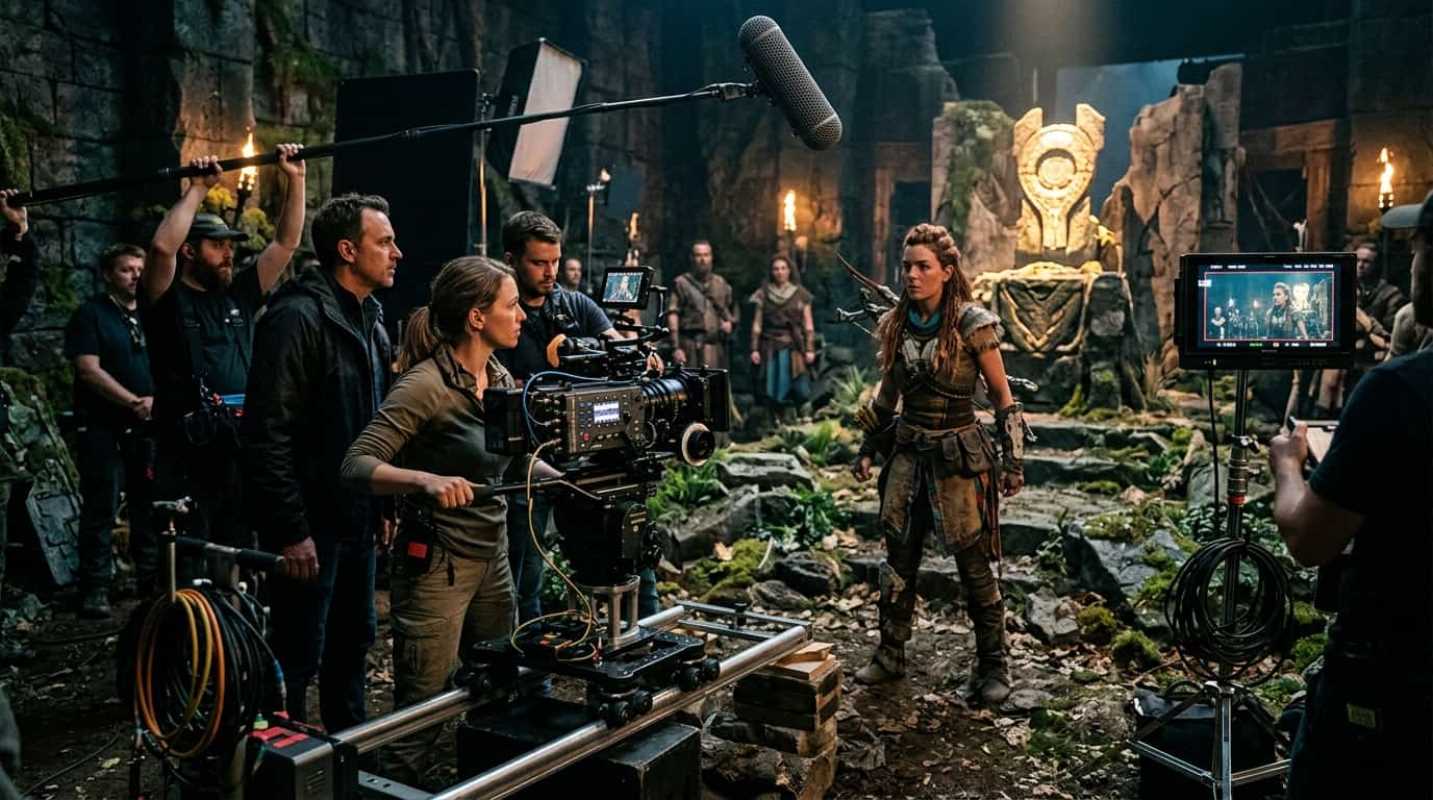
Meanwhile, Hollywood's approach to live-action anime adaptations has fundamentally changed. Following the massive global success of Netflix's One Piece, major studios are greenlighting high-budget adaptations for iconic series like Naruto, Gundam, and Akira.
High Fashion and the Anime Aesthetic
If you walk through any major city, you'll see anime influence far beyond movie screens. Look at modern street style and high fashion.
Luxury fashion houses are jumping at the chance to partner with famous anime franchises. We have seen Loewe collaborate with Studio Ghibli, Gucci design lines with Doraemon, and Dolce & Gabbana team up with Jujutsu Kaisen. These limited capsule collections sell out in hours and command thousands of dollars on secondary markets.
Why are high-end brands paying so much attention to animation? It comes down to basic demographics. Almost half of U.S. anime viewers belong to Gen Z and Gen Alpha, with an even split between male and female viewers. High-end brands recognize that anime is a direct line to a younger, trendy demographic with real buying power.
Streetwear culture has embraced anime just as eagerly. Graphic tees featuring vintage anime artwork, cyber-punk outerwear, and futuristic sneakers have moved from convention halls straight onto fashion week runways.
A Gateway for New Audiences
If you have never watched a single episode of anime, diving into a library of thousands of titles can feel a lot of. Where do you even begin?
Social media makes entering the fandom much easier. Short clips on TikTok and Instagram go viral instantly, introducing millions of non-viewers to iconic fight scenes, funny character interactions, or stunning animation sequences before they ever touch a remote control.
For newcomers wanting to cross over, certain shows bridge the gap between Western television pacing and Japanese storytelling styles.
• Attack on Titan: Perfect for fans of dark political thrillers like Game of Thrones. It offers relentless mystery, massive scale, and non-stop suspense.
• My Hero Academia: An easy entry point for fans of Western superhero movies, offering a fresh take on comic book hero origin stories.
• Cowboy Bebop: A jazz-infused space western that feels like a classic Hollywood noir film dressed up in sci-fi animation.
• Demon Slayer: Famous for setting new standards in action animation, making it ideal if you appreciate incredible cinematic art.
The Future of Global Entertainment
Where is all of this momentum taking us in 2026 and beyond? We are seeing a complete convergence across media channels.
Consider the gaming industry. Surveys of top gaming executives show that roughly 65% are actively developing video games based on anime franchises. Major live-service games like Fortnite routinely host massive in-game events around series like Dragon Ball and Jujutsu Kaisen to keep millions of players active.
Music charts are showing the exact same trend. Opening theme songs are no longer just background audio. They are global chart-toppers. Tracks like Creepy Nuts' "Bling-Bang-Bang-Born" and YOASOBI's "Idol" racked up hundreds of millions of international streams, taking Japanese pop music straight to the top of global Billboard charts.
What we are watching right now is not a temporary trend that will fade away next year. Anime has built a permanent home in global pop culture, changing how stories are told, how fashion is designed, and how media is consumed across the globe.
Sources:
1. Dentsu Anime Research Report
https://assets-eu-01.kc-usercontent.com/7bf8ef96-9447-0161-1923-3ac6929eb20f/c8e93927-08e1-4d08-8b4d-d0582abd9304/dentsu_Anime%20-%20A%20Growing%20Opportunity%20for%20Brands%20%282025%20Global%20Research%20Report%29.pdf?pubDate=20250704
2. Screen Daily Japan Box Office Hit Record High
https://www.screendaily.com/news/japan-box-office-hit-record-high-in-2025-boosted-by-demon-slayer-kokuho/5213141.article
3. Popverse TV Anime Industry Growth and Hollywood Fatigue
https://www.thepopverse.com/tv-anime-industry-growth-hollywood-sequels-survey-2025