When was the last time you spent an entire evening with friends without anyone checking a smartphone? If you can't remember, you're not alone. We live in a hyper-connected world, yet many of us feel completely burnt out by screens. That's exactly why tabletop gaming is experiencing a massive boom right now. The global board game market reached nearly $20 billion recently and is projected to top $30 billion over the next decade.¹
People are actively searching for ways to disconnect from their devices. After staring at video meetings and social media feeds all day, nobody wants to spend their evening staring at another digital display.
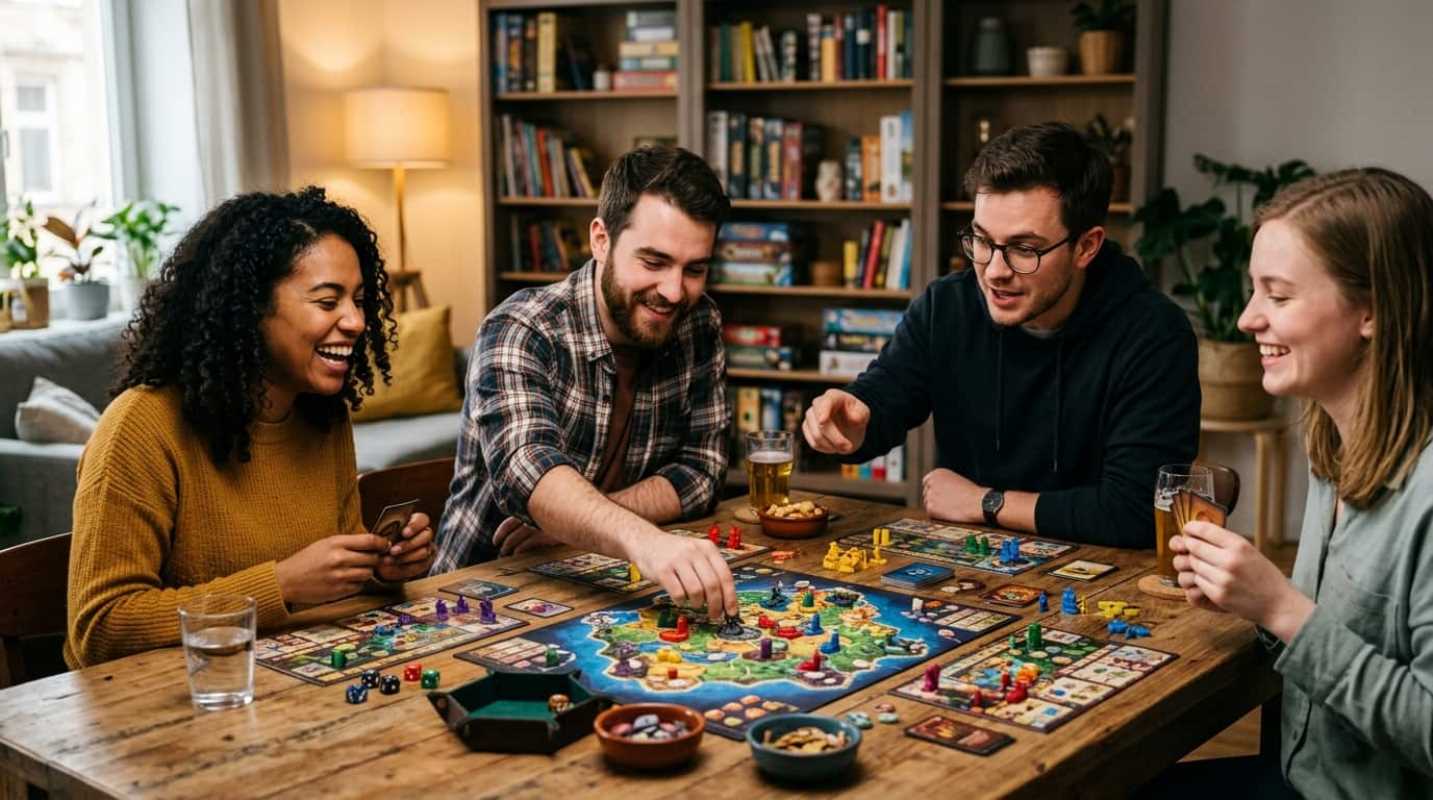
Instead, we want something tactile and personal. We want the feel of shuffling smooth cards, rolling acrylic dice, and gathering around a real wooden table with friends. Board game cafés are popping up everywhere, and tabletop conventions are pulling in record crowds. Tabletop gaming is no longer an obscure rainy-day activity. It's a full-blown cultural shift toward face-to-face entertainment.
Modern game design plays a huge role in this boom too. Designers have moved far away from the repetitive, luck-heavy mechanics of older household games like Monopoly. Today's games focus on rich choices, cooperative problem-solving, and gorgeous table presence.
Curating Your Collection: Choosing Games for Different Group Sizes
Have you ever tried pulling out a complex three-hour approach game at a noisy Friday night party? It usually ends in bored guests, half-read rulebooks, and someone turning on the TV. Buying games isn't just about picking what looks neat on a shelf. It's about matching the game to your actual guest list.
Modern game designers place a huge emphasis on scalability. They tune mechanics so a title plays well whether you have two players or six. Still, picking the right option for your specific headcount makes a world of difference.
When you're assembling your collection, keep these group dynamics in mind:
• Two-Player Duos: Look for tight, head-to-head mechanics. Games built specifically for two players avoid the clunkiness of dummy players or modified boards.
• Medium Groups (3 to 5 players): This is the ideal head count for approach engines, worker placement, and immersive narrative adventures. You get plenty of player interaction without long wait times between turns.
• Party Groups (6 or more players): Stick to simultaneous play, quick rounds, or social deduction. If a player has to wait twenty minutes for their turn, their attention will instantly drift back to their phone screen.
Balancing complexity with player count keeps the energy high. Knowing your audience is half the battle when planning a successful gathering.
Must-Play Titles: Trending New Board Game Releases
If you're ready to refresh your tabletop shelf, the recent wave of game releases offers incredible variety. Designers are constantly inventing new mechanics that turn standard cardboard into deeply satisfying experiences.
Here are the breakout hits that deserve a spot on your table:
• Sky Team: This tense two-player cooperative game won the prestigious Spiel des Jahres award.² You and your partner take on the roles of a pilot and co-pilot trying to land a commercial airplane across various airports. Because communication is restricted during dice placement, every decision feels urgent and rewarding.
• Wyrmspan: Fans of engine-building games will love this spiritual successor to Wingspan. You trade backyard bird watching for dragon research, excavating subterranean caves and hatching dragonlings to build powerful card combos.
• Slay the Spire - The Board Game: Adapting a popular digital video game to cardboard is tough, but this co-op deck-builder succeeds completely. Players use plastic card sleeves to physically upgrade their deck actions as they battle through dungeons together.
• Harmonies: A peaceful spatial puzzle game where you arrange colorful tokens to build 3D spaces. Creating ideal habitats for animals earns points, offering a relaxing yet clever challenge for casual and experienced players alike.
Setting the Stage: Elevating Your Game Night Atmosphere
Hosting a memorable game night involves much more than just taking a box off the shelf. Think of yourself as a director creating an experience. Small details in your room setup turn a basic play session into an event your friends talk about for weeks.
How do you set a vibe that keeps everyone engaged? Start with these simple hosting upgrades:
• Choose the Right Snacks: Greasy potato chips and melted chocolate will ruin game cards and custom pieces instantly. Serve dry, bite-sized snacks like almonds, pretzels, or grapes with toothpicks.
• Set the Mood with Music: Background audio fills awkward silences while setting the tone. Try low-volume instrumental soundtracks or ambient playlists that fit your game's theme.
• Fix Your Lighting: Make sure your dining table has clear, overhead lighting. If players are squinting to read tiny card text in dim light, their focus will wane quickly.
• Teach the Rules Efficiently: Learn the game inside and out before your guests arrive. Start your explanation with the end goal, explain basic player actions, and save edge-case exceptions for when they actually happen during play.
The Future of the Tabletop Hobby
Where is the tabletop industry headed next? We are already seeing clever app integrations, hybrid physical-digital designs, and eco-friendly manufacturing become standard. Yet no matter how far technology advances, the core magic of board games remains completely physical.
This hobby is about human connection. It's about laughing over an absurd dice roll, collaborating on a desperate puzzle, or celebrating a narrow victory together.
So clear off your dining table, invite a few friends over, and open a fresh game box. Putting down your phone and picking up a set of dice might just become the best part of your week.
Sources:
1. NextMSC Market Report
https://www.nextmsc.com/blogs/whats-driving-the-board-games-market-boom-in-2025
2. Spiel des Jahres
https://www.spiel-des-jahres.de/en/award-winners-2024/