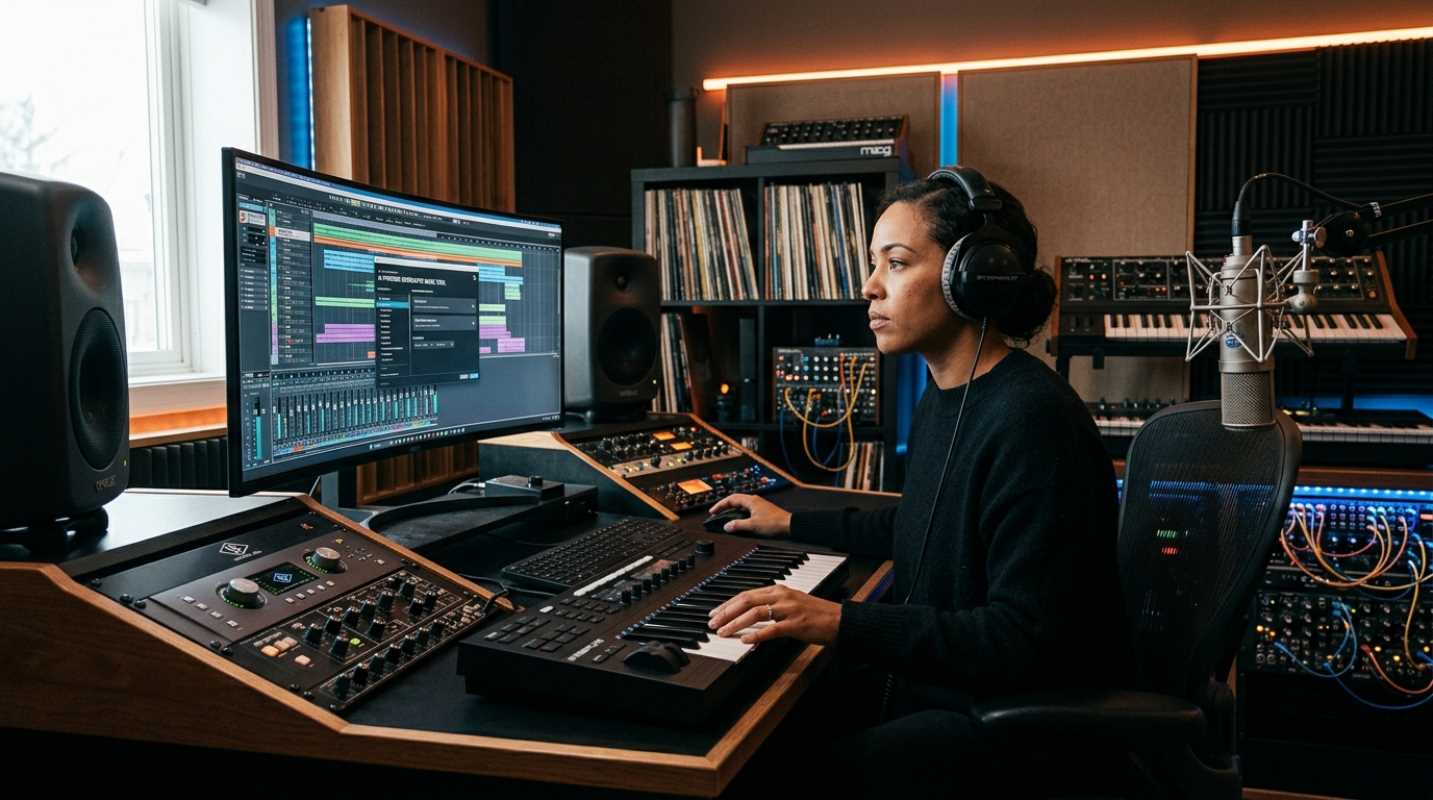
How many times have you stared at a blank screen in your digital audio workstation, waiting for inspiration to strike? We've all been there. The blinking cursor on an empty project file is one of the most frustrating parts of making music.
But the music technology scene in 2026 is completely different than it was just a few years ago. Artificial intelligence is no longer a sci-fi gimmick or a cheap trick. It is a daily collaborator in the modern studio.
This shift democratizes high-end production tools so anyone with a laptop can make radio-ready tracks, rather than replacing your talent. Think of AI as a highly capable assistant who never gets tired, never runs out of ideas, and works at lightning speed. Let's look at how this technology is actually changing the game for creators today.
The Rise of Generative Music Tools
Generative music tools used to be a fun novelty. You would type in a weird prompt, get a muddy-sounding MP3 back, and laugh at how strange it sounded. Not anymore.
Today, generative AI is a serious professional utility. The global AI in music market reached 6.65 billion dollars in 2025, and shows just how fast this tech is scaling.¹ A late 2025 study by LANDR revealed that 87% of music creators now use AI somewhere in their workflow.²
Ditto Music discovered that 60% of musicians embrace AI for creation, and over 36% of professional producers have integrated these tools directly into their studio setups.³ Tools like Suno, Udio, and LANDR Layers let you generate melodies, chords, and full arrangements in seconds.
You don't have to use the raw AI generation as your final track. Instead, you can extract the MIDI, drop it into your favorite synth, and tweak the notes until they feel right. This makes the ideation phase incredibly fast. If you need a starting point for a house track, you can generate five different chord progressions in under a minute, keeping your creative momentum going when you might otherwise get stuck.
AI in Mixing and Mastering
Let's be honest. Nobody gets into music production because they love cleaning up background noise or fixing frequency masking. We want to write melodies and build vibes.
AI handles the tedious, technical tasks that used to take hours of precise manual labor. It frees you up to focus on the creative decisions.
Here are a few ways AI handles the heavy lifting in the mix phase
• Noise reduction: Tools like iZotope RX can instantly remove background hums, mouth clicks, and wind noise.
• Frequency balancing: Smart EQs analyze your tracks to detect frequency masking and suggest clean-up cuts.
• Mastering preview: Automated services give you quick, streaming-ready versions of your tracks for testing.
For mastering, platforms like LANDR and Masterchannel have made the final polish accessible to everyone. Although a top-tier human mastering engineer is still preferred for a major album, AI mastering is perfect for getting quick, streaming-ready reference tracks. It allows you to hear how your mix translates to different playback systems without spending a fortune.
Redefining Sound Design and Sample Manipulation
Finding the perfect sound used to mean digging through folders of samples for hours. It was a massive drag on creative flow.
AI has completely changed how we handle sound design. Now, we have tools that can separate a finished stereo mix into individual tracks, called stems, in seconds.
Software like LALAL.AI and Loudly Stem Splitter can pull a clean vocal out of an old vinyl record or isolate a drum loop with shocking clarity. This is a massive win for producers who love sampling or remixing older tracks.
We also have AI-powered search engines that scan your entire sample library. Instead of clicking through hundreds of kick drums, you can drag in a sound you like and ask the AI to find every similar sound in your collection. It means you spend less time searching and more time actually creating, and lets you build unique, personalized sound textures without losing your momentum.
Ethical Considerations and the Human Element
With all this power comes a lot of friction. The rise of AI has triggered massive legal battles and intense debates about what makes music authentic.
Right now, the industry is watching a massive legal fight. Major record labels sued Suno and Udio for copyright infringement, claiming they trained their models on copyrighted songs without permission.
In May 2026, the labels used audio-fingerprinting tech to find their tracks in Suno's training data, and expanded the lawsuit to over 60,000 recordings. The potential damages could reach over 9 billion dollars.
Although Warner Music Group and Universal Music Group settled their lawsuits to launch licensed models, Sony Music remains the sole holdout. Even the American Federation of Musicians filed a lawsuit in June 2026, claiming these label settlements did not share royalties with the actual musicians.
We are also seeing new laws to protect artists. Tennessee passed the ELVIS Act to stop unauthorized voice cloning, which allows artists and their labels to sue for damages. There is also a federal push for the NO FAKES Act to protect an artist's voice and likeness nationwide.
So, will machines eventually replace us? Not likely.
A Luminate survey found that 44% of U.S. consumers are less interested in music if they know it was made by AI.⁴ Gen Z and Gen Alpha are actually the most skeptical.
We are even seeing a human rebellion in the charts. Artists like FKA Twigs and Fred again.. are deliberately releasing raw, imperfect, analog music. They are choosing loose beats and raw phone memos over digital perfection.
At the end of the day, human intent is what gives music its soul. AI can give you a perfect chord progression, but it can't feel heartbreak or tell a personal story. Singer-songwriter Lacy put it perfectly when she said that there is just no replacing heart in anything.
Top AI Tools for Modern Producers
If you want to start experimenting with these technologies in your own studio, here are some of the best tools currently leading the industry.
Embracing the Future of Sound
The integration of AI into music production is not a passing fad. It is a permanent shift in how music is made, shared, and experienced.
The best thing you can do as a producer is to stay curious. Don't fear the technology, but don't let it do all the heavy lifting for you either.
Use these tools to speed up your workflow, break through writer's block, and clean up your mixes. But always keep your unique human perspective at the center of your work.
The future of sound brings humans and machines together to see what we can create as a team.
Sources:
1. Market.us
https://market.us/report/ai-in-music-market/
2. LANDR
https://www.landr.com/ai
3. Musicful
https://www.musicful.ai/news/ai-music-statistics/
4. Luminate Data
https://luminatedata.com/blog/consumer-survey-finds-increasing-discomfort-with-generative-ai-in-music/